Table Of Content

The authors of the study hypothesise that this thicker cuticle may act as a barrier to skin damage from urine, which contains the irritant compounds ammonia and urea. Much of the effort that goes into shaping or removing pubic hair also shapes and defines sexual identities. Research has shown that women, in particular, feel social pressure to remove body hair and that pubic hair can affect their self-perception and sexual attractiveness. If you experience itching, you can apply hydrocortisone or another anti-itch medication to the area. If you do scratch at the area, apply an over-the-counter triple antibiotic ointment to the area to help minimize the risk of infection. Folliculitis can often be treated with antibacterial soap and moisturizers.
Creams to reduce inflammation
Although genital warts can go away on their own, seeing a doctor can get rid of them faster. “Sebaceous cysts are benign, usually superficial lumps that can occur anywhere on the vulva and often show up as a bump on the labia,” Dr. Dweck explains. If it’s been a few weeks and the bump hasn’t subsided, check in with a doctor about it.
Exactly How to Shave Pubic Hair Safely If You Have a Vagina SELF - Self
Exactly How to Shave Pubic Hair Safely If You Have a Vagina SELF.
Posted: Mon, 21 Aug 2023 07:00:00 GMT [source]
How does a person get rid of ingrown pubic hair lumps?
An ingrown hair is one that's grown back into your skin instead of rising up from it. Ingrown hairs are also known as razor bumps, shave bumps, ingrown hair bumps, or barber bumps. To soothe the area, applying a cold compress or using A+D Ointment or a light, alcohol-, dye-, and fragrance-free aloe vera gel may sometimes help, says Dr. Phillips. "But if you have open skin, I usually recommend leaving it alone," she says. "Often, some of the astringents people put on [an ingrown hair] further burn and damage the skin, so I try to encourage people to let their body do its healing."
Psoriasis vs. Eczema
Still, you might think a few cherry-red, itchy bumps here and there are worth the fuzz-free bikini line and ability to feel like your most confident self. To reduce the chances of getting ingrown hair cysts, keep your skin clean and gently exfoliated and moisturized. If you do shave, don't shave too close, and always shave in the direction the hair grows. Wash and rinse your pubic area with warm water before shaving. If you shave your pubic hair while the skin is dry, you might increase your chances of developing ingrown hairs.
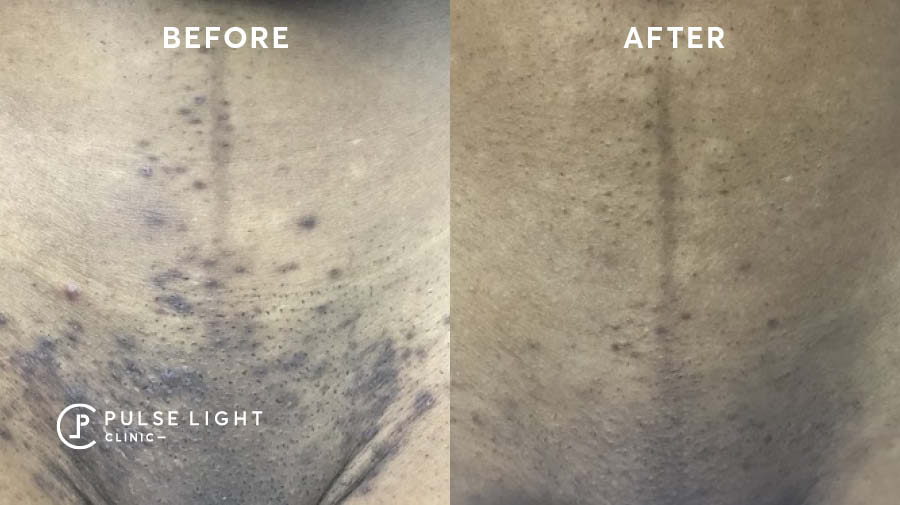
There's always a more permanent option if you're sick of having irritated skin from waxing or shaving. "Laser hair removal is the best option if you don't want to deal with ingrown hairs," says Karp. This technique damages the hair follicle, preventing the hair from growing back in.

Ingrown Pubic Hair: Causes, Treatment, and Prevention
This hair removal method involves pulling all the hair out at the root with hot wax or a sugary paste. The results may last for several weeks, but the process can be painful. There is a risk of burns and general irritation, plus small cuts and other skin damage you can’t see. Trimming is the safest option because it shortens your pubic hair without cutting close to the skin, which can lead to injury or infection. You can use scissors or a trimming tool marketed for use on pubic hair, or even tools made for trimming beards.
Charitable Care & Financial Assistance
If that's not an option, you might try other hair removal methods that lessen the risk of developing ingrown hair. Stopping ingrown pubic hairs from developing in the first place is much easier than trying to get rid of them, says Dr. Phillips. If an infection develops and worsens, you may need medical treatment. Once the hair is out, you can pluck it out using tweezers.
Pubic Ingrown Hair Treatments That Work, According to Dermatologists
They could also apply a mild antiseptic onto the ingrown hair to help reduce the risk of infection. Experiencing recurring ingrown hairs when you don't shave or otherwise remove hair from your vaginal area could be a sign of another problem 1. Large, painful cysts may be mistaken for ingrown hairs, but can actually be caused by Staphylococcus or fungus and may require prescription antibiotics 1. Some sexually transmitted diseases can also cause lesions that resemble ingrown hairs 1. Speak to your doctor if you have any concerns about recurring ingrown hairs 1.
Bump on Vagina: Common Causes and When to See a Doctor - Business Insider
Bump on Vagina: Common Causes and When to See a Doctor.
Posted: Tue, 30 May 2023 07:00:00 GMT [source]
How are ingrown pubic hairs treated?
Below are frequently asked questions relating to ingrown pubic hairs. An ingrown pubic hair cyst can develop anywhere in the pubic area. It may result, for example, from removing hair from the bikini line. It will not have a visible head and may be red, white, or yellow. An area with ingrown hairs may have little reddish bumps that may itch. It might be possible to see the hair trapped within the skin.
Plus, when they're in places such as the pubic area and near your vulva—where skin is more delicate and sensitive—they can be painful, too. A nongreasy moisturizer can get reduce dead skin cells, which often clog follicles and contribute to ingrown hairs. If the ingrown pubic hair gets infected, the bumps may be painful and filled with pus. Ingrown hairs in the pubic area can form cysts — sacs of fluid beneath the skin. A person may notice a lump, possibly with a hair visible beneath it. Cysts often go away without treatment, but some require antibiotics or draining.
Read on to learn more about how to get rid of ingrown hair, as well as some tips for prevention. SELF does not provide medical advice, diagnosis, or treatment. Ingrown hairs can be frustrating wherever they show up, which can include basically any part of your body that has hair, like your legs, armpits, arms, and face.
You should never squeeze or pop a boil that develops near your vagina. Try home remedies that encourage the boil to rupture and drain on its own. Along with itching, you might also notice cottage cheese-like discharge or redness and irritation of the outside skin, she says. In addition to itching, the inflammation from an ingrown can also make the spot painful.


No comments:
Post a Comment